The Missing Paragraph: Why a Home Test Result Needs a Record, Not a Screenshot

Photo: Tim Sheerman-Chase, CC BY 4.0, via Wikimedia Commons
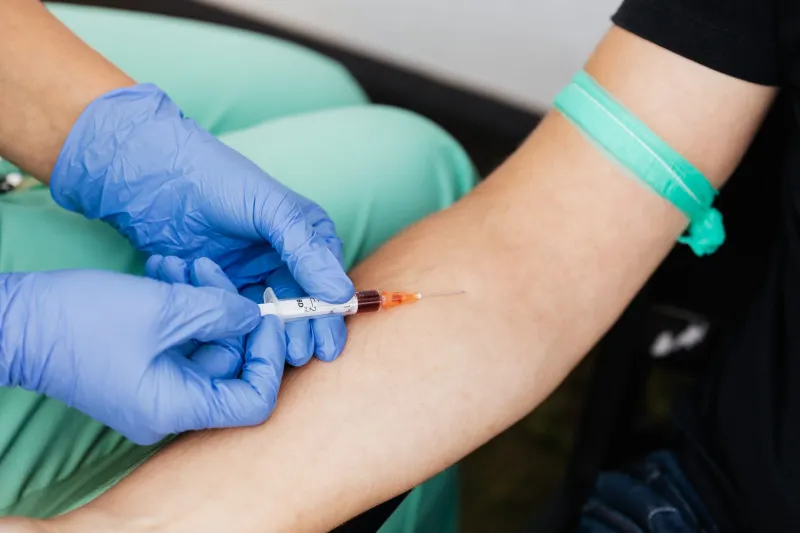
A patient completes a home test on a Tuesday evening. The result appears in an app, is saved as a PDF, or is photographed and brought to a GP appointment the following week. The clinical question is straightforward: does this result change care? The recordkeeping question is less straightforward: can the NHS see it, trust it and act on it? Too often, the answer is no. The result exists, but the record does not. That is the handover gap.
Home testing has moved from novelty to routine in several areas of UK care. It can support monitoring, triage and earlier conversations about treatment. Yet a result that cannot be found, interpreted or attributed inside the clinical record is not yet a clinical result. It is a document. The distinction matters because the NHS does not run on documents alone; it runs on structured, attributable and actionable information.
A result is not a record
A record has properties that a screenshot lacks. It identifies the person reliably. It states what was measured, how, when and by whom. It carries units, reference ranges and, where relevant, the device or lot used. It records consent for sharing and the lawful basis for processing. It can be queried, audited and linked to subsequent care. A PDF in an inbox may contain some of this, but rarely in a form that a GP clinical system can use without manual re-entry.
This is not a criticism of patients. It is a design problem. Home diagnostic pathways have matured faster than the plumbing that connects them to primary care. In 2026, the expectation should be that a clinically relevant home result can cross into the NHS record without relying on a patient to act as an unpaid data-entry clerk.
Identity: whose result is it?
Every handover begins with identity. A result that cannot be matched to the correct NHS number is a patient safety risk, not a data convenience. Vendors should design for verification at the point of test registration, not retrospectively. Where self-reported identity is unavoidable, the record should say so plainly. A result labelled “self-reported identity, unverified” is more honest than a result that implies a confidence the system does not have.
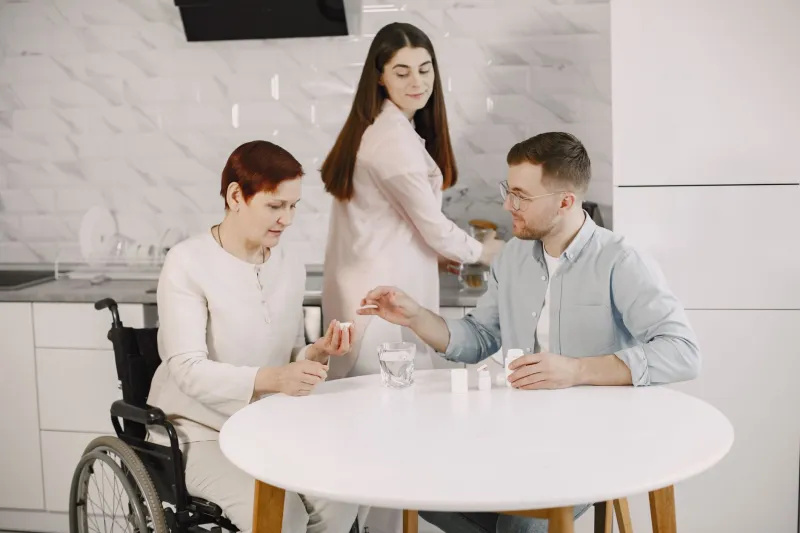
NHS teams should also consider the proxy case: parents testing children, carers testing dependants, and relatives testing older people. The record must distinguish the person tested from the person reporting. Consent and custody of the result need to be explicit, particularly where a third party holds the app account.
Consent and lawful basis
Sharing a home result with the NHS is not the same as sharing it with a commercial app. Patients need a clear explanation of what will be shared, with whom, for what purpose and for how long. Consent should be specific enough to be meaningful, but not so fragmented that it becomes unworkable. The lawful basis under UK GDPR must be identified, and the common-law duty of confidentiality must be respected.
A practical requirement is a visible sharing decision that can be revoked where appropriate, with a record of when consent was given and what was shared. That record belongs with the result. Without it, a clinician receiving a result cannot easily tell whether the patient intended it to reach general practice or only wanted a personal copy.
Coding: from prose to structured data
Coding is where many handover attempts fail. A PDF that says “negative” may be clinically clear to a human reader, but it is not a structured observation. For the NHS record, the result needs a defined test name, analyte, result value, unit, reference range, collection date and interpretation. SNOMED CT coding should be used where appropriate, and local terminology should be mapped rather than improvised at the point of upload.
The minimum data set should be agreed before launch, not after. It should include the NHS number where available, the test and version, the specimen or sample type, the collection date and time, the result and units, the reference range, the device or assay identifier, the performer (self-test, assisted test or laboratory), the laboratory accreditation where relevant, and a provenance marker. A result without a unit or reference range is not a complete observation; it is a fragment.
Provenance: can the clinician trust what they see?
Clinicians are rightly cautious about results of uncertain origin. Provenance is the answer. It tells the reader where the result came from, how it was generated and whether it has been altered. A home test result should carry a clear chain: device or kit identifier, lot number where available, app or platform version, timestamp, and whether the result was manually entered or automatically captured. If a laboratory processed the sample, the laboratory’s accreditation and reporting conventions should be visible.
Provenance also protects vendors. A structured record with clear attribution is easier to audit and easier to defend than an unstructured PDF. It allows the NHS to distinguish a validated diagnostic output from a wellness claim that happens to look clinical.
Workflow: the result must arrive where action happens
Even a well-coded result can fail if it arrives in the wrong place. A message in a generic inbox, a portal notification or a patient-held app is not the same as a result filed in the GP clinical system. NHS teams should specify the intended destination, the review responsibility and the expected turnaround. Vendors should support the NHS interoperability standards that general practice can actually consume, rather than relying on manual upload.
Clinician workflow also needs protection. Home results should not create a new stream of unactionable alerts. They should carry an interpretation and, where appropriate, a recommended action, but the responsibility for clinical decisions must remain clear. A result that says “discuss with clinician” without saying why is not actionable; it is merely anxious.
What should be required in 2026
Before a home diagnostic is connected to NHS records, commissioners and vendors should be able to answer five questions. First, how is identity verified and recorded? Second, what consent has been captured and how is it auditable? Third, what structured data fields are transmitted, and to which standard? Fourth, what provenance accompanies the result? Fifth, who reviews it, where, and within what timeframe?
These are not technical niceties. They are the conditions for safe clinical use. The UK has strong foundations: established terminology, clinical safety standards, and a primary care system accustomed to structured data. The task is to apply them consistently to home diagnostics rather than treating the home setting as an exception.
The handover gap will not close by asking patients to bring better screenshots. It will close when a home result is designed, from the outset, to become a record: identified, consented, coded, attributed and routed to the place where care is decided. Until then, the NHS will continue to see fragments of useful information while missing the paragraph that would make it clinically meaningful.