The Unopened Envelope: Auditing the Home Test Kits That Never Get Used

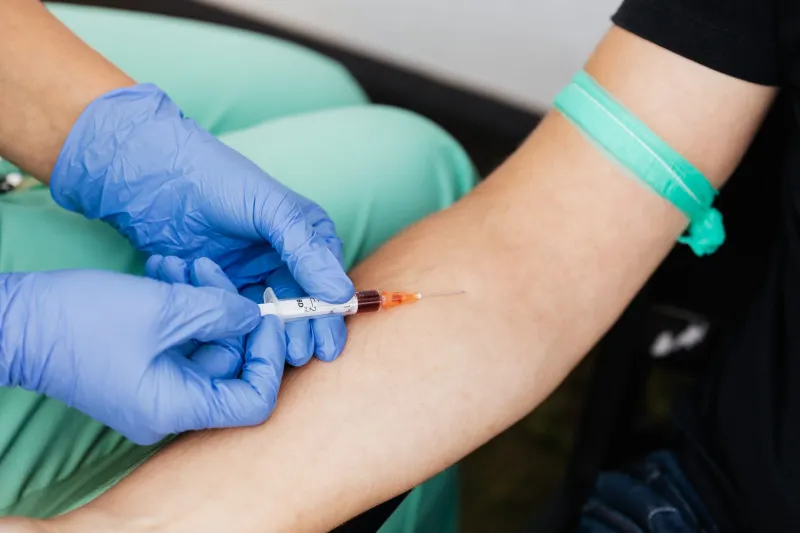
Photo: unopened home medical test kit on a table with envelope, UK healthcare context, via weeklyadpreview.com
A home test kit arrives in an envelope, a box or a pharmacy bag. It is opened, or it is not. It is used, or it is put in a drawer. In UK diagnostics, the sector has become adept at counting kits dispatched and results returned. It is far less adept at counting the kits that are never opened at all. That gap matters. An unused diagnostic is not simply a wasted consumable. It is a missed opportunity to detect, exclude or monitor disease, and it is a quiet signal about how well a pathway is working for the person it was designed to serve.
The part of the pathway nobody owns
Most diagnostic pathways have a visible beginning and a visible end. A clinician orders a test, a laboratory processes a sample, and a result returns to a record. Between order and result, however, sits a human step that is often treated as outside the formal system: the patient must collect, complete and return the kit. When that step does not happen, the pathway usually records nothing at all. There is no result, no exception code and no follow-up task. The kit simply disappears from view.
This is not a small administrative blind spot. Home testing has expanded across UK care, from sexual health screening and bowel cancer screening to remote monitoring and community diagnostic programmes. Each expansion increases the number of points at which a kit can stall. Yet many providers still measure success by dispatch volume and laboratory throughput, not by the proportion of eligible people who actually complete the test. The result is a distorted picture: activity is visible, but effectiveness is not.
Mapping the reasons kits go unused
Non-use is not a single behaviour. It is a cluster of different problems, and each requires a different response. Providers should resist the temptation to label every unreturned kit as non-adherence. In practice, the reasons are more ordinary and more fixable.
Some kits are never expected to be used. A test may be ordered defensively, duplicated across services, or sent to an address where the person no longer lives. Others arrive without adequate explanation. The patient may not understand why the test matters, what the instructions require, or what will happen after the result. A kit that arrives without context is a kit that competes with everything else on the kitchen table.
Practical barriers also matter. Fine motor difficulty, poor eyesight, limited health literacy, language differences and unstable housing can all make a simple kit difficult to complete. So can the return journey. A prepaid envelope helps, but only if the patient can reach a postbox. A digital result portal helps, but only if the patient can log in. When the return route is unclear, the kit stays where it was opened.
Fear and stigma should not be underestimated. Some people avoid testing because they do not want to know the answer. Others worry about what a positive result would mean for work, family or immigration status. A small proportion may have had a previous poor experience of testing and see the new kit as more of the same. These are not reasons to abandon home testing. They are reasons to design it with more care.
A simple audit framework for providers
An audit of non-use does not need to be elaborate. It needs to be routine, proportionate and linked to improvement. The following framework can be adapted to screening programmes, community diagnostic services and primary care pathways.
1. Define the denominator clearly. Count every kit that was legitimately issued to an eligible person in a defined period. Separate first-time kits from replacements, and distinguish kits sent by post from those handed over in clinic. Without a clean denominator, non-use rates are meaningless.
2. Capture activation as well as return. A returned kit is not the only sign of engagement. Where possible, record whether the kit was opened, whether a result was submitted, whether the sample was invalid, and whether the result was acted on. This turns a binary 'returned or not' measure into a more useful pathway map.
3. Link non-use to clinical outcome. An unreturned kit is more serious in some pathways than others. A missed screening test in a high-risk group carries a different weight from a missed optional wellness check. Audit should ask what follow-up was offered and whether the person was later seen by another route.
4. Ask non-users directly. A short, voluntary survey can be revealing. Was the kit received? Were the instructions clear? Was the return method practical? Did the person intend to use it but run out of time? Providers should offer multiple response modes, including post and telephone, and should avoid framing the questions as a compliance check.
5. Stratify by equity, not just average. Non-use may be concentrated among older people, people with disabilities, people in temporary accommodation or communities with lower digital access. An overall completion rate can hide a serious equity gap. Audit should report variation by age, deprivation, ethnicity and mode of delivery where data allow.
6. Close the loop. The final step is the one most often omitted. Findings should feed back into kit design, instruction wording, reminder timing, return options and clinician conversations. An audit that produces a report but no change is simply another form of non-use.
Designing for the second attempt
Reminders are not a substitute for good design, but they can recover a meaningful proportion of stalled kits. The evidence from UK screening and vaccination programmes points in a consistent direction: timed, specific and low-friction reminders work better than generic ones. A message that says 'your kit has not been returned' is less useful than one that says what to do, how long it takes and where to get help.
Providers should also consider the emotional tone of reminders. Shame is a poor motivator. A neutral message that offers a replacement kit, a telephone helpline or a conversation with a clinician is more likely to preserve trust. Where a kit has been sent in error, the patient should be able to say so easily. Where a kit has been opened but not completed, the offer of help should be explicit.
Design changes can reduce non-use before it happens. Pre-delivery messages can set expectations about what the kit contains and what will happen next. Instructions can be tested with people who have low health literacy. Return options can include both post and drop-off points. Digital results can be accompanied by a clear statement of what the result does and does not mean. None of these measures is radical. Together, they treat the patient as a participant in the diagnostic pathway rather than a recipient of a parcel.
From silent failure to clinical signal
The unused kit in the drawer is not a moral failure. It is a data point. It tells us that something in the pathway did not fit the person's life, and it gives providers a chance to adjust. In 2026, as home diagnostics become more common in UK care, the sector should stop treating non-use as an unmentionable residue and start auditing it as a routine quality measure. The kit that never gets used is not outside the system. It is the part of the system we have not yet learned to see.