The Supported Lifetime: Making Diagnostic Device End-of-Life a Clinical Responsibility
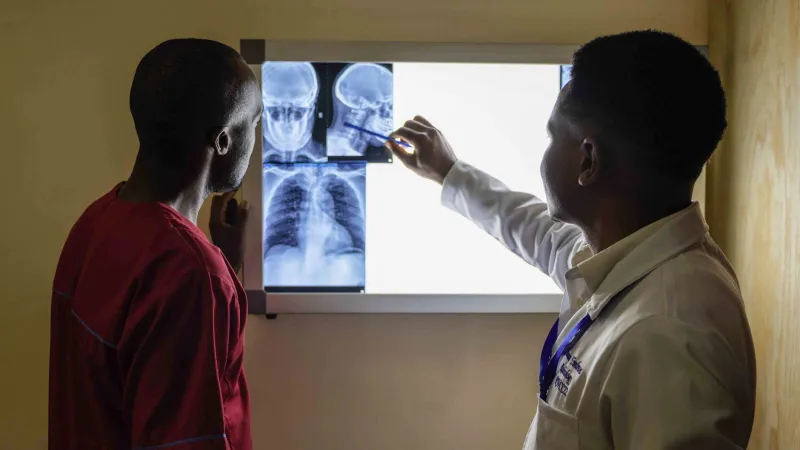
Connected diagnostic devices have moved from the margins of UK care to the centre of it. Home monitors for blood pressure and oxygen saturation, point-of-care analysers in community clinics, and software-linked tests in care homes now support decisions every day. Yet the conversation about these tools tends to stop at adoption: whether a device is accurate, whether staff can use it, and whether the budget exists. Far less attention is given to what happens when the model is discontinued, a consumable is withdrawn, or a software update no longer arrives.
That gap is not merely administrative. For a patient whose care depends on a particular device, end-of-life is a clinical event. It can interrupt monitoring, disrupt a treatment plan, and leave a clinician without the data they have come to rely on. In 2026, as more connected diagnostics enter routine pathways, the NHS needs a disciplined approach to retirement that is as thoughtful as its approach to procurement.
End-of-life is a clinical event
A diagnostic device is rarely just hardware. It is a chain of dependencies: a sensor, a consumable, a calibration process, a mobile application, a connectivity route and a reporting interface. When one link is removed, the clinical service can fail even if the box itself still switches on.
This is why decommissioning should not sit solely with estates, IT or finance. Clinical teams need to identify which patients rely on a device, what decision the device informs, and what alternative exists. A pulse oximeter used for remote monitoring in a respiratory service is not equivalent to a consumer wellness tracker. The former may have an agreed escalation pathway; the latter may have no clinical governance at all. End-of-life planning must distinguish between convenience and dependency.
The hidden dependencies: consumables, software and connectivity
Discontinuation often begins quietly. A manufacturer stops producing a proprietary consumable. A software update is no longer certified for an older operating system. A mobile network changes its technical standards, or a vendor withdraws an integration with an electronic patient record. Each change can strand a device that was, until recently, fully functional.
UK teams should therefore map the supported lifetime of every diagnostic device, not just its warranty. That map should include consumable availability, software support dates, cybersecurity patching, calibration services and data export options. Regulatory status such as UKCA marking confirms that a device met requirements at a point in time; it does not guarantee indefinite supply or support. Procurement and clinical governance need to work from the same evidence base.
Contracting for the exit
Too many contracts focus on purchase price and implementation. A more mature approach specifies what happens at the end. NHS organisations should seek clear minimum support periods, advance notice of discontinuation, guaranteed consumable supply for an agreed term, and a documented migration route. Where software is involved, contracts should address data portability, secure deletion and the format in which records will be returned.
These requirements are not adversarial. They give suppliers a clear basis for planning and give NHS teams a defensible position when a product reaches the end of its commercial life. For devices used in primary care networks, community diagnostic centres or care homes, the contract should also name who is responsible for patient communication when a model changes. Without that clarity, responsibility tends to fall to the clinician who happens to notice the problem first.
A migration pathway, not a recall notice
When a device is withdrawn, patients need more than a letter. They need a safe transition. That may mean a replacement device, a revised monitoring schedule, a temporary clinic-based alternative, or a decision to stop monitoring where the clinical value no longer justifies the burden. The right answer depends on the patient and the purpose of the test.
A practical migration pathway should identify affected patients, assess clinical risk, agree a replacement or withdrawal plan, update records, and confirm that patients understand what has changed. It should also include a feedback route so that problems are captured rather than absorbed silently. In small services, this can be a short checklist. In larger organisations, it may need a named coordinator and a reporting line into quality governance.
Registers and responsibilities
You cannot migrate a device population you cannot see. A maintained register of connected diagnostic devices, linked to clinical ownership and contract dates, is the foundation of safe retirement. The register does not need to be elaborate, but it must be current. It should record the model, the clinical use, the responsible team, the support end date and the patient groups affected.
Responsibility should be explicit. Procurement owns the contract, clinical teams own the care pathway, and information governance owns the data exit. But someone must own the whole transition. In many NHS settings, that role is missing. Creating it is less expensive than discovering, months later, that a community service has been quietly relying on an unsupported device.
What good looks like in 2026
Good end-of-life practice is not a single policy. It is a habit of asking, at adoption, how this device will be retired and who will be affected. It means treating support dates as clinical information, not just commercial detail. It means telling patients plainly when equipment is changing and why. And it means recognising that the opposite of abandonment is not endless maintenance, but planned continuity.
Diagnostic technology will continue to change. The test for UK care is whether change is managed as part of clinical responsibility. A device that has reached the end of its supported life should not become a patient's problem by default. With better contracts, visible registers and migration pathways, end-of-life can be planned rather than improvised.