What the Kit Wasn't Looking For: Incidental Results in UK Home Diagnostics
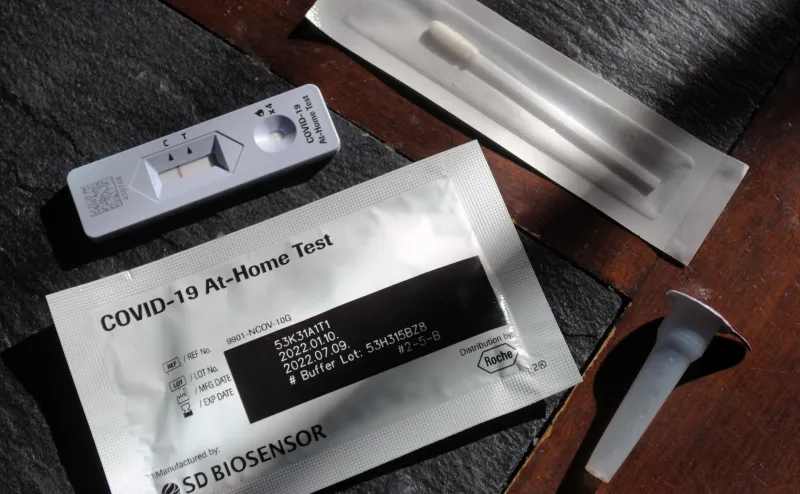
A home diagnostic kit is a narrow instrument. A ferritin test is commissioned to look at iron stores; a private genetic panel is bought to explore a particular predisposition; a wellness screen is marketed around a handful of markers. The sample, however, does not know the scope of the question. Neither does the algorithm that interprets it. Occasionally the result points somewhere else entirely. That is the incidental finding: an observation that falls outside the original purpose of the test but may still carry clinical, psychological or insurance consequences.
The UK market for home and near-home diagnostics has expanded quickly, and with it the likelihood that more people will encounter an unexpected result without a clinician in the room. The question for 2026 is not whether incidental findings will occur. It is whether the services that generate them have a defensible pathway for consent, disclosure and follow-up.
The scope problem starts at the label
Every diagnostic has an intended use. That intended use shapes validation, performance claims and the instructions for interpreting a result. An incidental finding sits outside that envelope. It may be a genetic variant discovered during a targeted panel, a low platelet count noticed on a full blood count purchased for fatigue, or an unexpected marker of kidney dysfunction in a broad wellness package.
The difficulty is that the label rarely tells the buyer what the test is not looking for. Consumer-facing copy tends to emphasise the question being answered, not the questions the assay might raise. In practice, a test that is analytically sound for its intended purpose can still produce a result that is clinically uncertain when applied outside it. Good diagnostic literacy requires that distinction to be made explicit before purchase, not after the result arrives.
Consent is not a single tick
For NHS-adjacent services, consent should cover the possibility of incidental findings in broad terms: what categories might arise, whether they will be reported, who will review them and what the limits of interpretation are. For consumer kits, the same principle applies, even if the contractual framing differs. A single checkbox confirming that terms and conditions have been read is not meaningful consent to receive information about a serious inherited condition.
There is also a right not to know. UK clinical practice recognises that some patients may prefer not to receive certain categories of secondary information, particularly in genetics. Consumer services should be able to record that preference without making it impossible to act on urgent, actionable findings. The balance is not always comfortable, but it is better handled before the sample is posted than in a follow-up email.
Disclosure needs a clinical owner
An incidental finding should not be disclosed simply because it has been detected. It needs verification, classification and a route into care. That requires a named clinical owner: a person or service accountable for deciding whether the result is actionable, uncertain or best left out of the report.
For NHS-adjacent diagnostics, that owner may sit within the commissioning laboratory or the referring primary care team. For consumer kits, the position is less settled. A service that reports a potentially serious finding without a route to clinical interpretation places the buyer in an impossible position. At minimum, the provider should state whether a clinician has reviewed the result, what the recommended next step is and how the person can access NHS care if needed.
Disclosure should be proportionate. Not every variant or borderline marker warrants a letter to a general practitioner. Actionability, severity, certainty and the availability of effective intervention are reasonable filters. But those filters must be documented. Without them, disclosure becomes inconsistent and impossible to audit.
Follow-up is where most schemes fail
The weakest point in any incidental findings pathway is the gap between result and action. A home test can generate a PDF; it cannot by itself arrange a repeat sample, a specialist referral or a conversation with a clinician. If the pathway ends at the report, the service has transferred risk to the user without transferring support.
A workable pathway has several stages. It should define the scope of the test and the categories of incidental finding that may be reported. It should record consent and any stated preference not to know. It should verify findings in an accredited laboratory where clinical action is contemplated. It should classify results into urgent, routine and uncertain categories, with clear timeframes for each. It should communicate in plain English, signpost the appropriate NHS route and keep a record that can be shared with the person's clinician, subject to consent.
A practical pathway for 2026
For UK services, the following minimum expectations are reasonable:
- Publish a pre-test statement of scope, including what the test is not designed to detect and whether incidental findings will be reported.
- Record consent separately for primary results and for categories of secondary or incidental information.
- Name the clinical owner responsible for reviewing unexpected results and set out how they can be contacted.
- Verify any finding before disclosure where clinical action may follow.
- Use a small number of triage categories with defined response times and auditable criteria.
- Provide a written next step that names the relevant NHS service, rather than leaving the user to navigate the system alone.
- Audit incidental findings periodically, including how many were reported, how many were confirmed and how many led to care.
None of this removes uncertainty. It does, however, make the service accountable for the information it chooses to surface. That is the difference between a diagnostic product and a diagnostic system.
The test is not the system
Incidental findings are not a rare edge case to be handled by a disclaimer. They are a predictable consequence of looking at biological samples with increasingly sensitive tools. The UK's strength in diagnostics lies not only in laboratory science but in the ordinary machinery of primary care, referral and record-keeping that turns a result into a decision. Home kits and NHS-adjacent services should be designed to connect with that machinery, not to sit outside it.
A test that answers an unasked question is not necessarily a bad test. It becomes a bad service if nobody has decided in advance who will answer the next question.