Reference Ranges Are Not Reassurance: Designing Lab Results for the NHS App
Access is not the same as explanation
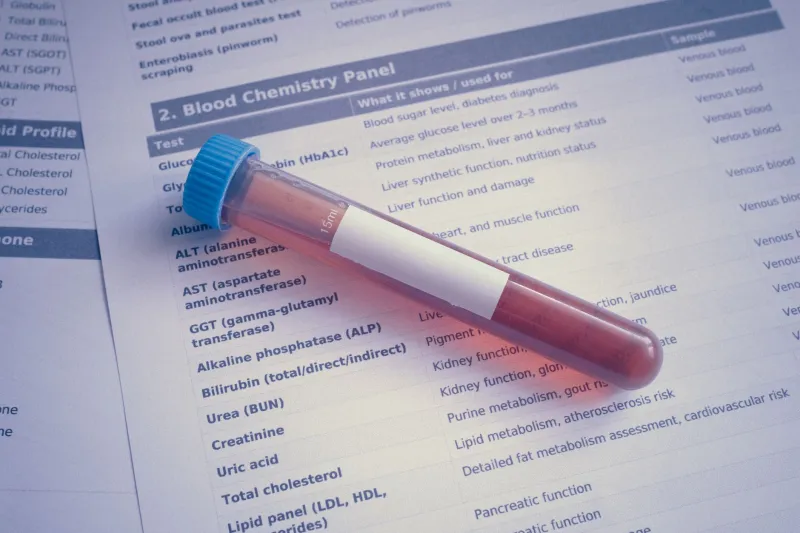
The NHS App and local patient portals have changed the practical relationship between UK patients and their laboratory results. A blood test taken in primary or secondary care can now appear on a phone before a clinician has had the chance to discuss it. That shift is broadly welcome. It supports autonomy, reduces dependence on telephone calls and allows people to keep their own records. But access to a PDF is not the same as access to an explanation. Laboratory reports are written for a technical audience: they use abbreviations, units, analytical flags and reference ranges that assume a working knowledge of the pathway behind the sample.
When that document arrives without context, two unhelpful responses become more likely. One is anxiety: a mildly raised value is read as a diagnosis. The other is false reassurance: a result inside the printed range is treated as proof that nothing is wrong. Both miss the purpose of a laboratory result, which is to contribute evidence to a clinical judgement, not to replace it.
What a reference range can and cannot say
Reference ranges are usually derived from a defined population. They describe where most results from a comparable group fall, not what is ideal for every individual. Age, sex, ethnicity, pregnancy, medication, time of day, hydration and recent illness can all move a result. Pre-analytical factors matter too: how the sample was taken, how long it spent in transit and whether the patient was fasting. Analytical variation is a further layer. A small change between two tests may reflect the assay rather than the person.
This does not make ranges useless. It makes them context-dependent. A result just outside a range may be clinically unimportant; a result inside it may still warrant attention if symptoms, history or a previous trend point elsewhere. The clinician's task is to combine the number with the person in front of them. The designer's task is to present the number without implying a certainty the laboratory never claimed.
A practical framework for presentation
Health-tech teams and clinical services can use a simple structure. It should be tested with patients, not assumed.
- State what was measured and why. A result is more legible when it sits beside the reason for the test. 'Full blood count requested as part of a routine review' is more useful than a bare panel name.
- Explain the range in plain language. Say that the range describes expected values for a reference group and that being outside it is not automatically a diagnosis. Avoid presenting 'normal' and 'abnormal' as binary moral categories.
- Show uncertainty honestly. Where a result is borderline, say so. Where a repeat test is the usual next step, say that. Do not replace one ambiguous number with an overconfident sentence.
- Make the next step explicit. Patients need to know whether to wait, book, call or seek urgent help. A result screen without an action pathway invites search-engine interpretation.
- Preserve the clinical relationship. Direct people to a named route for questions, whether that is the requesting GP practice, a specialist team or a helpline. Do not leave a contact gap that the internet will fill.
Visual design matters as much as wording. Colour alone should not carry meaning, because it excludes some users and exaggerates mild deviations. A red flag next to a result that is 0.1 outside a range can create alarm disproportionate to the finding. Trends, where available, are often more informative than a single snapshot, but they need their own explanation. Accessibility testing with older patients, people with low health literacy and people using screen readers should be part of the design process, not a final compliance check.
For clinicians: the conversation after the portal
Clinicians cannot always control when a result becomes visible, but they can prepare for the questions that follow. Where services have discretion over release, a brief explanatory message alongside the result can prevent a long call later. Standard phrases help, provided they are accurate and locally approved. 'This result is slightly outside the expected range; we will repeat it in six weeks' is clear. 'Everything is fine' is not, if the result will be reviewed or repeated.
Practices should also consider how they document those explanations. If a patient has seen a result and contacted the surgery, the response should be visible in the record and consistent across staff. Safety-netting remains essential: patients need to know which symptoms should prompt urgent contact rather than waiting for a routine review.
Legibility as a safety feature
The NHS App has made transparency real for many patients. The next stage is to make that transparency usable. A laboratory report should answer three questions in plain English: what was measured, what the result may mean in context, and what happens next. It should not pretend to diagnose, and it should not hide uncertainty behind a reassuring colour.
For those translating biomedical research and diagnostics into everyday care, the principle is straightforward. Legibility is not decoration. It is part of clinical safety. A result that is visible but misunderstood is not truly accessible, and a portal that informs without orienting the reader simply moves the uncertainty from the laboratory to the patient's kitchen table.