The Catchment Is Part of the Test: Measuring Diagnostic Reach in UK Primary Care
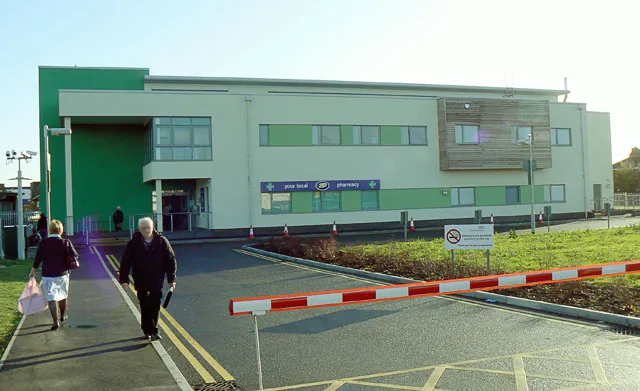
Photo: John Rostron, CC BY-SA 2.0, via Wikimedia Commons
A diagnostic pathway does not begin when the sample reaches the laboratory. It begins when a clinician decides that a test is needed and a patient is asked to attend a collection point. Between those two moments sits a practical question that is often treated as an operational afterthought: can the person actually get there? In UK primary care, where appointments, transport, caring responsibilities and work patterns all shape attendance, the answer is not uniform. A test that is clinically appropriate but practically unreachable is not a neutral inconvenience. It is a gap in the diagnostic process.
Access Is a Clinical Variable
Travel distance and journey time are frequently assigned to estates, transport or commissioning teams. That division of labour is understandable, but it can obscure a clinical reality. Sample collection depends on attendance. Attendance depends on whether a collection point is reachable within the time, cost and confidence that a patient can manage. When those conditions fail, the result is not simply a missed appointment. It may be a delayed diagnosis, a repeated consultation, an incomplete pathway or a clinical decision made with less information than the clinician intended.
This is why access should be treated as a quality indicator alongside turnaround time, sample rejection rates and result communication. It describes whether the diagnostic service is doing what it was designed to do for the population it serves. The point is not to add another target to already stretched services. It is to make visible a determinant of diagnostic completion that is currently easy to overlook.
What a Two-Hour Radius Can and Cannot Tell Us
The phrase “two-hour radius” is useful as a discipline rather than a rule. It asks teams to consider total door-to-door journey time, not straight-line distance on a map. A collection point three miles away may be effectively inaccessible if it requires two buses, a long walk and a return journey that conflicts with school pickup. A point twelve miles away may be manageable for a patient with a car and flexible working hours. The same radius contains very different lived geographies.
A practical catchment map should therefore combine several layers: the registered population, the location and opening hours of collection capacity, public transport frequency, walking and cycling access, car ownership, age profile, disability, rurality and deprivation. It should also include the less visible constraints: caring responsibilities, shift work, language and communication needs, and the confidence to navigate an unfamiliar health setting. These factors do not need to be modelled with false precision. Even a simple travel-time banding exercise can reveal where attendance is likely to be hardest.
Defining a Diagnostic Desert
A diagnostic desert is not merely an area without a laboratory. It is an area where a meaningful share of the population cannot reach a suitable collection point within a reasonable total journey time during the hours that collection is actually available. That definition matters because it shifts attention from buildings to reachability. A town may have a hospital laboratory, but if phlebotomy appointments are concentrated in a narrow morning window and the bus service does not start early enough, the service is not equally available to everyone.
Commissioners and primary care networks can test for this by looking at the proportion of the local population within 30, 60 and 90 minutes of a collection point by public transport and by car. They can then compare those bands with order-to-collection intervals, missed appointment rates, rebooking rates and sample rejection patterns. If patients in the longest travel band are consistently less likely to complete collection, the service has an access problem that clinical performance alone will not explain.
Designing Capacity Around the People Least Able to Reach It
Community collection can take many forms: phlebotomy in general practice, pharmacy-based services, community diagnostic centres, outreach clinics and mobile collection rounds. Each has different governance, staffing and sample-handling requirements. None should be treated as a lower standard of care. A mobile service still needs trained staff, safe identification, appropriate infection prevention, reliable cold chain and a clear route for results and follow-up. The advantage is not that it is informal; it is that it moves capacity closer to the people who need it.
Mobile and community capacity should be scheduled using the access map, not only by population density. A round that visits areas with the highest order-to-collection gaps may achieve more than one placed where collection is already convenient. Similarly, extending opening hours in a reachable location may be more effective than opening a new site that few patients can get to. The design question is not “where is there space?” but “where is the unmet need, and what would make attendance feasible?”
Making Reach Visible in Routine Governance
Access indicators should sit within existing diagnostic governance rather than in a separate strategy document. Integrated care boards, primary care networks and laboratory services can agree a small set of measures: the percentage of the population within defined travel-time bands, completion rates by band, time from order to collection, and the proportion of samples that fail stability requirements because of transport or delay. These measures should be stratified by deprivation, age, disability and rurality where data allow.
The results should be shared with patients and frontline staff in accessible formats. A map on a commissioning slide is not enough. Reception teams need to know which patients may struggle to attend and what alternatives exist. Clinicians need to know whether a test with a narrow collection window is realistic for the person in front of them. Patients need clear information about travel, accessibility and what to do if they cannot attend. None of this replaces clinical judgement, but it supports it.
Before the Sample Is Taken
The diagnostic process is often evaluated after the sample arrives. That is too late to see the people who never got there. In 2026, as UK diagnostic capacity continues to be reconfigured across community settings, the catchment should be treated as part of the test. The question is not only whether the assay is reliable, but whether the pathway is reachable. A two-hour radius is less a boundary than a prompt: before optimising collection, ask who can reach the collection point, who cannot, and what the service intends to do about the difference.