The Pharmacy Front Door: What Must Be True Before Diagnostics Move to the High Street
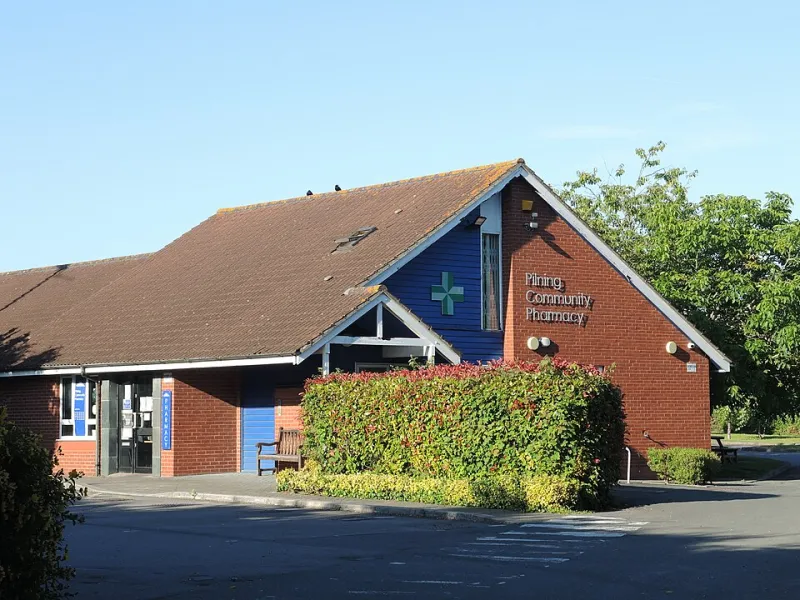
Photo: Neil Owen , CC BY-SA 2.0, via Wikimedia Commons
Why the high street is attractive
Community pharmacies are open long hours, located in town centres and high streets, and already manage repeat prescriptions, vaccination and minor illness consultations. In 2026, NHS England, integrated care systems and pharmacy bodies are exploring how far this network can become a “front door” for diagnostics: capillary blood testing for HbA1c or lipids, near-patient INR monitoring, point-of-care tests for infections, and supported self-monitoring for long-term conditions. The appeal is obvious. Moving a blood test closer to home may reduce travel, free GP time and help people who find conventional appointments difficult to attend.
But the phrase “pharmacy diagnostics” covers a wide spectrum. A test that is mature in one setting may be unsuitable in another. A device that carries a CE or UKCA mark is not automatically validated for the population, workflow or clinical decision it will support. The central question for 2026 is not whether pharmacy can host diagnostics. It is which diagnostics can be delivered safely, with clear referral pathways and assured follow-up, outside a laboratory and outside general practice.
What is actually ready for everyday care
Some tests have a stronger evidence base than others. Capillary HbA1c testing is well established in many settings, though pre-analytical variation, haemoglobinopathies and acute illness can affect results. Near-patient INR testing is mature in anticoagulation services where training, quality control and dose adjustment are governed. Pregnancy testing and some infectious disease tests are routine in pharmacy settings, but their clinical consequences are usually clear and referral pathways are relatively simple.
Other tests are less straightforward. Point-of-care lipid panels vary in accuracy and standardisation, and a single result outside a laboratory pathway may not be sufficient to start or change statin therapy without confirmatory testing. C-reactive protein testing for acute respiratory infection has been studied in primary care, but its use in community pharmacy requires careful protocols because CRP cannot reliably distinguish bacterial from viral infection in every case. Multiplex respiratory panels may be technically feasible, but they raise questions about cost, infection control, result interpretation and what the patient should do with a positive or negative result.
The practical test is not whether a device can produce a number. It is whether that number changes a decision safely, with a documented pathway for confirmation, treatment or referral.
Validation is more than a regulatory mark
UK medical device regulation, through the MHRA, provides an important baseline. But regulatory approval is not the same as clinical validation for a specific use. A pharmacy service also needs analytical validation in the intended setting: sample collection by pharmacy staff, storage and transport, device maintenance, quality control and staff competence. Where results inform a diagnosis or treatment, accreditation against relevant standards, such as ISO 15189 for medical laboratories or equivalent quality frameworks for near-patient testing, should be considered.
There is also the question of governance. Who owns the result? Is it entered into the shared record? Who acts on an abnormal finding? What happens if the patient does not attend follow-up? A pharmacy chain’s pilot may report high patient satisfaction, but satisfaction is not the same as diagnostic accuracy or clinical outcome. The stronger announcements will report sensitivity, specificity, positive predictive value in the intended population, failure rates, and the proportion of patients who received appropriate follow-up.
Workflow realities and the consultation room
Community pharmacies are not small GP surgeries. Space is limited, privacy can be difficult, and infection control requirements differ. A capillary blood test requires a clean area, trained staff, sharps disposal and a process for managing incidental findings. A pharmacist may be competent to take a sample but not to interpret a complex result without a shared protocol. GP practices, meanwhile, need to know which results they will receive, how they will be coded and who is responsible for acting on them.
Payment and commissioning also shape behaviour. If a pharmacy is paid per test, there is a risk of over-testing or testing people who do not meet eligibility criteria. If it is paid only for completed consultations, there may be less incentive to follow up abnormal results. The safest models tend to be those with clear inclusion criteria, standard operating procedures, audit and a named clinical lead.
Equity is not automatic
Moving testing closer to home can improve access, but it can also create new inequalities. Pharmacies in affluent areas may have more space and staff capacity than those in deprived areas. People without a smartphone may struggle with digital booking. Patients with limited English may not receive adequate explanation. A negative result can provide false reassurance if the test is not sensitive enough or if the patient is lost to follow-up. Equity therefore needs to be measured, not assumed: who is offered the test, who accepts it, who receives a result and who gets the next step?
How to judge the next announcement
When a new pharmacy diagnostics scheme is announced in 2026, clinicians and patients can ask a consistent set of questions. What is the exact test and intended use? Has it been validated in a community pharmacy population? What is the reference standard? How are results communicated to the GP or hospital? What happens if the result is abnormal or inconclusive? Is there audit and public reporting? And does the service improve a clinical outcome, or mainly shift activity?
For patients, the practical questions are simpler: Will this test confirm or rule out a condition, or is it a screening step? Who will explain the result? Will it go to my GP record? What should I do if I feel worse before the result arrives? A pharmacy test should come with a clear answer to each.
A front door needs a safe corridor behind it
Community pharmacy can play a larger diagnostic role, but only where the evidence, workforce, governance and follow-up pathways are mature. The most credible 2026 pilots will be modest in scope and explicit about their limits. They will not claim that high street testing replaces laboratory medicine or general practice. At Sarissa Biomedical, the editorial test is the same one we apply to any biomedical innovation: does the evidence support the everyday use being proposed, and are the uncertainties stated clearly enough for professionals and patients to make an informed choice? A front door is useful only if the corridor behind it leads somewhere safe.